Plating Wellness: A Guide to Nutrient-Rich Eating with the Balanced Plant-Based Plate Method
The Plate Method is a visual guide designed to create well-balanced plant-based meals, emphasizing a diverse mix of vegetables, proteins, whole grains, and healthy fats, promoting nutritional adequacy in a vegan diet. This method simplifies meal planning for individuals seeking a healthful and sustainable approach to plant-based eating.
The Vegan Plate Method is a visual guide designed to help individuals create well-balanced and nutritionally sound plant-based meals. Similar to other dietary guidelines, such as the USDA MyPlate for omnivorous diets, the Vegan Plate Method offers a simple way to ensure that a variety of essential nutrients are included in each meal.


Here's an elaboration on the Vegan Plate Method
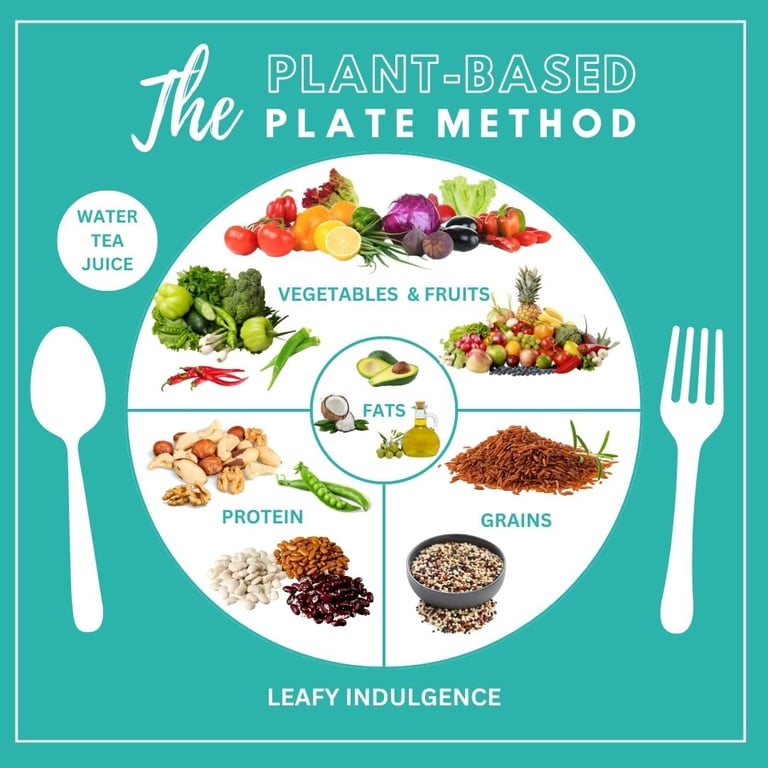
Vegetables: Fill half of your plate with a colorful array of vegetables. Aim for a mix of leafy greens, cruciferous vegetables (broccoli, cauliflower, Brussels sprouts), root vegetables (carrots, sweet potatoes), and other colorful options. This provides a rich source of vitamins, minerals, and fiber.
Protein: Allocate one-fourth of your plate to plant-based protein sources. This can include legumes (beans, lentils, chickpeas), tofu, tempeh, edamame, seitan, or plant-based protein alternatives. These foods supply essential amino acids, iron, and other nutrients.
Grains: Dedicate another one-fourth of your plate to whole grains. Choose options like quinoa, brown rice, bulgur, barley, oats, or whole wheat products. Whole grains provide complex carbohydrates, fiber, and various vitamins and minerals.
Healthy Fats: Include small amounts of healthy fats on your plate. This can be achieved by incorporating sources like avocados, nuts, seeds, or using plant-based oils such as olive oil or flaxseed oil. Healthy fats are crucial for nutrient absorption and overall well-being.
Beverages: Don't forget to stay hydrated. Water is the best choice, but herbal teas and other low-calorie, unsweetened beverages can also be included. Limit the intake of sugary drinks and excessive amounts of caffeinated beverages.
Supplements (Optional): Depending on individual nutritional needs, some people may choose to include vitamin B12, vitamin D, omega-3 fatty acids, or other supplements in their diet. Consultation with a healthcare professional can help determine specific supplement needs.
Variety and Moderation: Aim for variety within each category and across meals. Eating a diverse range of plant-based foods helps ensure a broad spectrum of nutrients. Additionally, practice portion control and mindful eating to maintain a healthy balance.
The Vegan Plate Method is a flexible approach that can be adapted to suit individual preferences, dietary requirements, and nutritional goals. It emphasizes the importance of consuming a variety of plant-based foods to meet nutrient needs and promote overall health. As with any diet, it's essential to listen to your body and make adjustments based on personal health goals and requirements.
How About Fruits?


While the Vegan Plate Method traditionally focuses on vegetables, grains, proteins, and healthy fats, it's important to highlight the role of fruits in a well-balanced vegan diet. Fruits are rich in essential vitamins, minerals, fiber, and antioxidants, making them a valuable component of a nutritious plant-based meal plan.
Here's how you can incorporate fruits into your vegan plate:
Include as Snacks: Fruits make excellent snacks. You can have a piece of fruit or a fruit salad as a refreshing and nutritious snack between meals.
Incorporate with Breakfast: Add fruits to your breakfast, whether it's by topping your cereal with berries, adding slices of banana to your oatmeal, or enjoying a fruit smoothie.
Desserts and Treats: Use fruits as a natural sweetener for desserts. Fresh fruit salads, baked apples, or grilled pineapple can be delightful and healthy dessert options.
Balance with Vegetables: While the Vegan Plate Method focuses on vegetables, it's important to note that fruits also contribute to the overall balance. Consider having a mix of both fruits and vegetables to ensure a diverse range of nutrients.
Dried Fruits and Nuts: Combine dried fruits with nuts for a satisfying and nutritious snack. However, be mindful of portion sizes as dried fruits can be calorie-dense.
Smoothies and Juices: Incorporate fruits into your smoothies or freshly squeezed juices for a delicious and hydrating beverage. Make sure to include whole fruits to retain the fiber content.
Remember that a key principle of a healthy diet is variety. Including a diverse range of fruits along with vegetables, whole grains, and plant-based proteins can help ensure you receive a broad spectrum of essential nutrients. Listen to your body, enjoy a colorful and varied plate, and make adjustments based on your individual nutritional needs and preferences.
The Vegan Plate Method is a flexible approach that can be adapted to suit individual preferences, dietary requirements, and nutritional goals. It emphasizes the importance of consuming a variety of plant-based foods to meet nutrient needs and promote overall health. As with any diet, it's essential to listen to your body and make adjustments based on personal health goals and requirements.